

Hi,
I noticed FluentCart loads product images in full size (e.g. 1500px+) even when they’re rendered much smaller (~300px). No srcset or WordPress image sizes seem to be used.
I’m using an FSE theme with the FluentCart blocks.
Is this intentional?
And are there plans to support WP thumbnails / responsive images?
This impacts performance, especially on product grids.

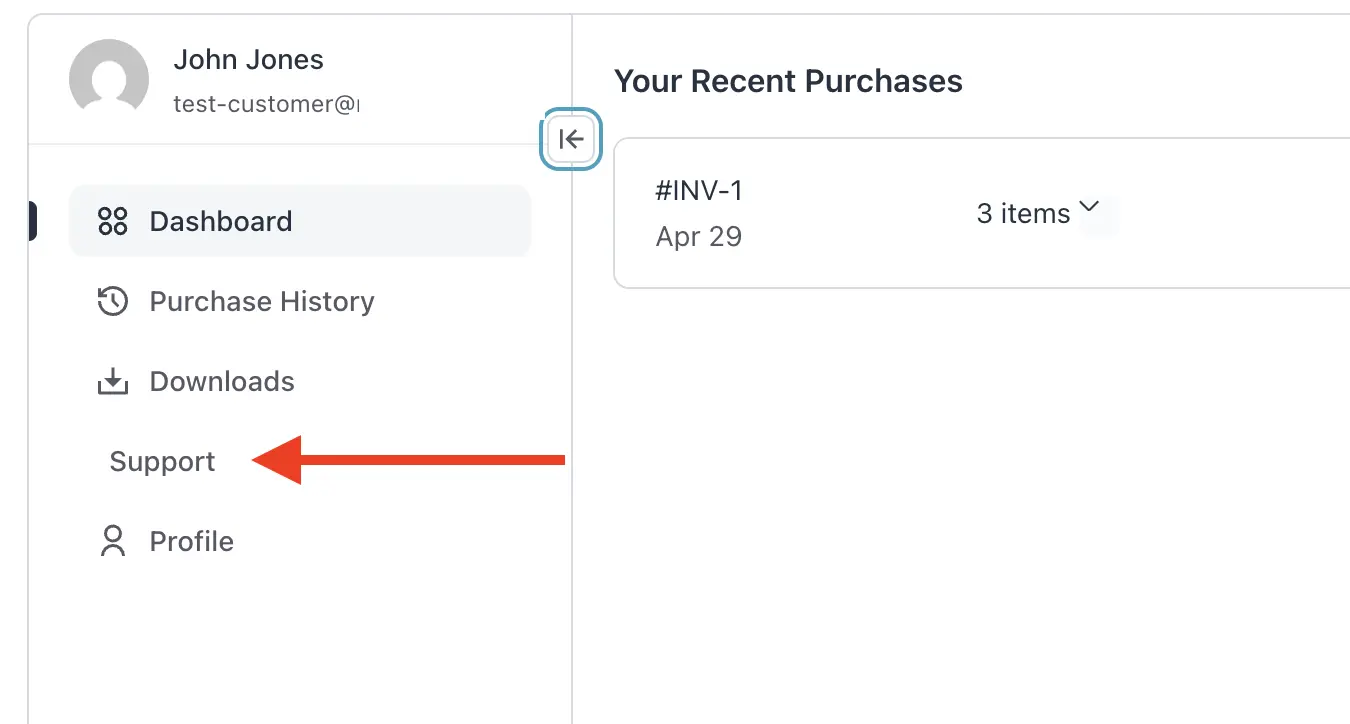
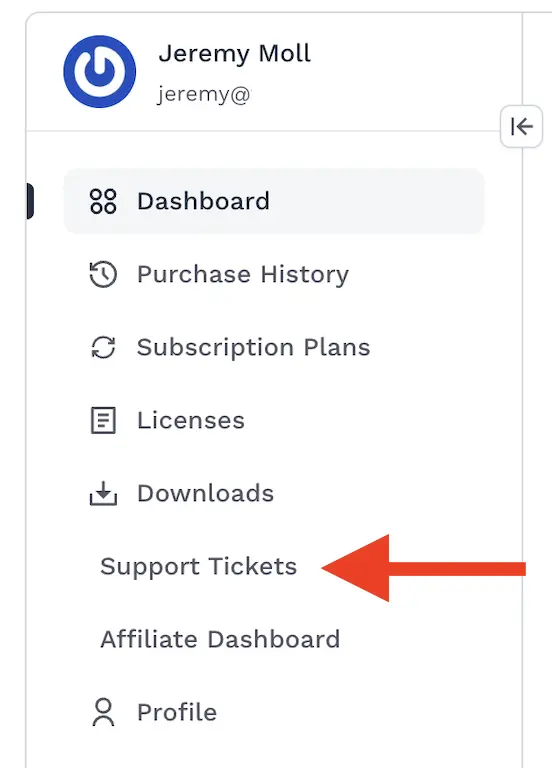
When enabling the Fluent Support "show tab in FluentCart customer dashboard" setting, a tab is added but it lacks an icon:
Additionally, on the WP Manage Ninja site's customer dashboard, the tab says "Support Tickets" – it would be great to be able to customize this tab's text without having to use a PHP hook:
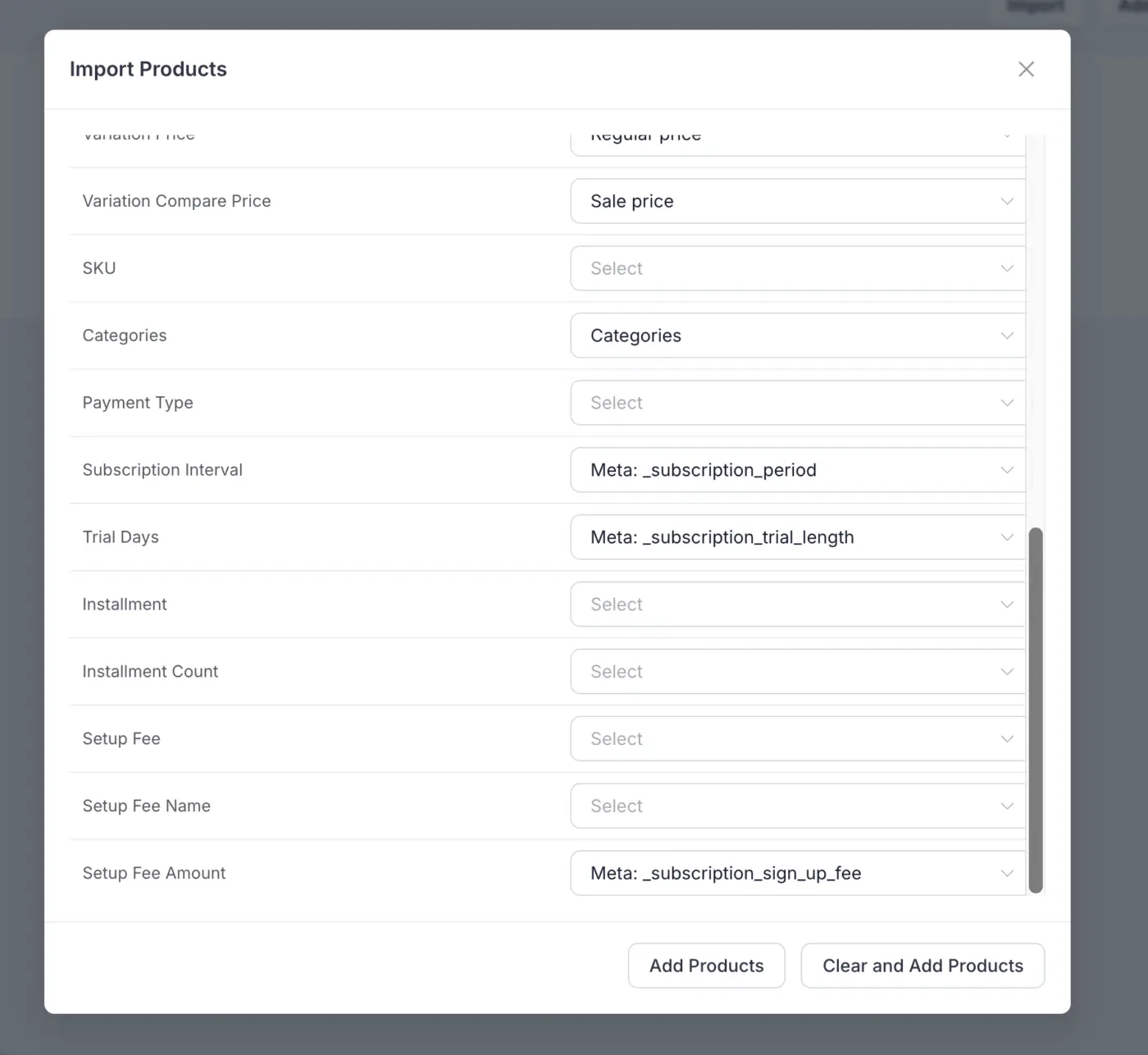
When using the "Import Products" CSV tool in FluentCart, I am unable to clear the select fields on the right. The values in this screenshot were auto-populated by the import tool, and I cannot clear the values (I can only select another value)

Right now, FluentCart elements behave like closed containers. That limits layout flexibility and forces us into predefined structures.
1. Make FluentCart elements nestable
Allow standard Bricks elements (Div, Block, Container, custom HTML, etc.) to be placed inside FluentCart elements.
This would give full control over layout, structure, and styling for:
- Product cards
- Cart items
- Checkout sections
- Order summaries
- Add to cart / Buy now buttons
- Quantity selectors
- Variation selectors (size, color, etc.)
- Checkout forms and fields
These are core UI components, and right now they can’t be composed freely. That makes it difficult to build anything beyond the default layouts.
This nesting pattern is already how Bricks works natively (e.g. Query Loop), and aligning with that would make FluentCart feel like a natural extension instead of a locked system.
2. Expose FluentCart data through Bricks dynamic data
FluentCart data should be available via Bricks dynamic tags, so it can be used anywhere, not only inside FluentCart elements.
For example:
{fc_product_price}{fc_order_total}{fc_customer_name}
This should include:
- Product, cart, order, and customer fields
- Support for building custom loops (products, cart items, orders)
- Conditional logic (e.g. cart empty, user purchased, order status)
Why this matters
These changes remove structural limitations and unlock full design freedom inside Bricks.
Right now, FluentCart has the functionality, but the layout system is the bottleneck.
Open that up, and it becomes viable for fully custom builds instead of only predefined layouts.

Hi everyone,
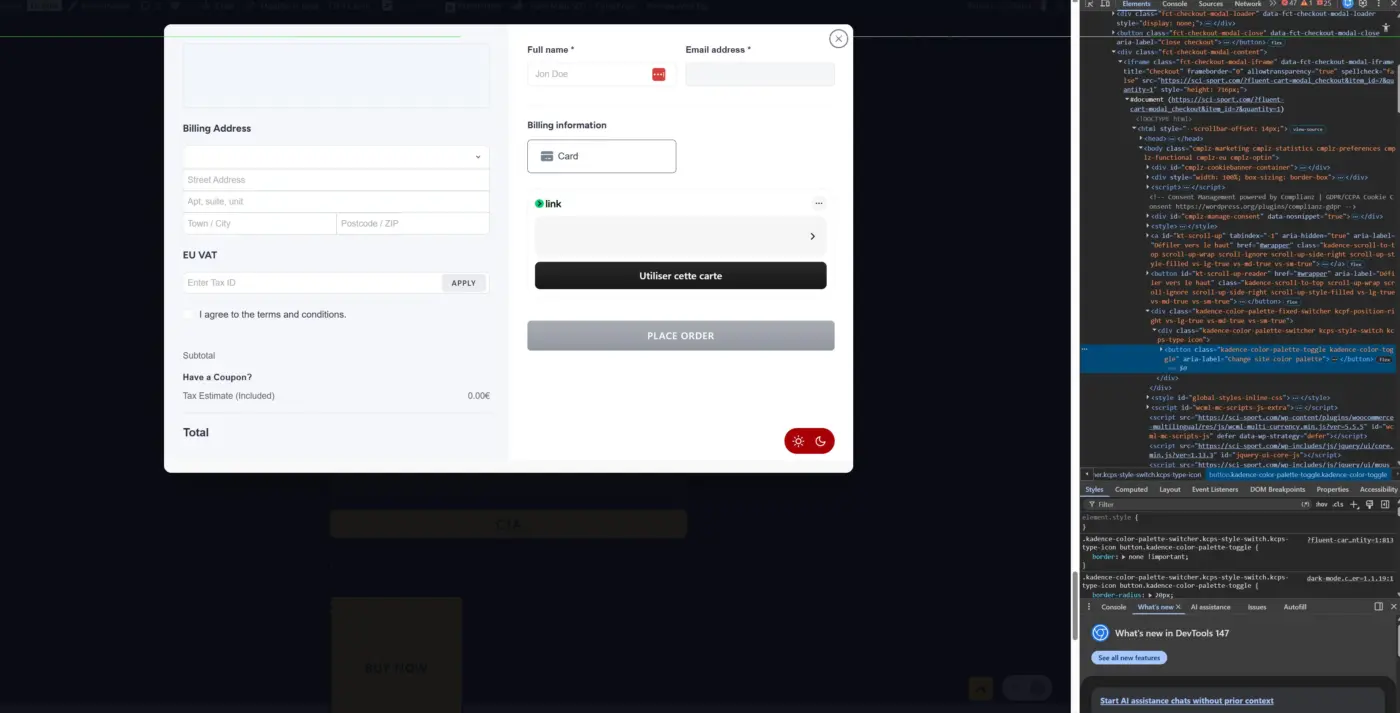
I would like to ask about the modal checkout. It's working as expected : a button on my landing page, et voilà, a perfect, quick modal checkout. Love it !
I'm using Kadence Theme, and I'm using the "Dark/Light" switcher as my website is mainly for reading. It's very handful for my students.
BUT... why is the switcher is included in the iframe of the modal. Also, it's not seen on the screen, but I'm using Complianz for cookies and it's also included in the iframe...
So, my question is : is it normal behaviour ? Can it be cleaned (I tried CSS without success) ?
Thanks !

Quick one today.
After the big release week, this update is the kind we wanted to ship next. Mostly polish, a few thoughtful additions, and a long list of fixes that quietly remove friction across the product.
Nothing flashy. Just sharper edges.
Here is what is new in 1.3.23:
- Subscription cancellation emails now show the access end date. Customers know exactly when their access ends instead of guessing. Should cut down on the "do I still have access?" support tickets.
- VAT numbers on PDF receipts. For B2B customers in the EU, UK, and other VAT regions. Drops in cleanly without manual workarounds.
- One-click installer for licensed addons. No more downloading, uploading, activating. Install your purchased addons straight from inside FluentCart.
- LearnDash course expiration is tied to subscriptions and licenses. Course access now follows the billing lifecycle. When the subscription ends, course access ends. No more drift.
Plus a few smaller wins: Paddle email control via filter hook, cleaner product card styling, and a solid stack of fixes, including license grace period status, downloads after a site URL change, PHP 8.4 timezone handling, dark mode empty states, and a bunch of papercut fixes across checkout, reporting, and license delivery.
If you sell subscriptions, licensed software, or B2B in VAT regions, this update is worth grabbing today.
Full changelog with details: https://fluentcart.com/blog/fluentcart-1-3-23/
That is it for now. More fun things cooking 👀

{reducted image}

I'm getting an error when trying to update FluentCart Pro from my Plugins dashboard. The base version updates without any problem. The error message is:
'An error occurred while updating FluentCart Pro: Download failed. Unprocessable Entity'
I downloaded the file from my Fluentcart.com account. It uploaded without any error at all.

Hey friends, im trying to build a custom product template for FluentCart and I cant quite get the add to cart button to work. I dont want to use the native element that FluentCart provides, but rather a custom button that i make with the Bricks builder. Any one have any ideas?

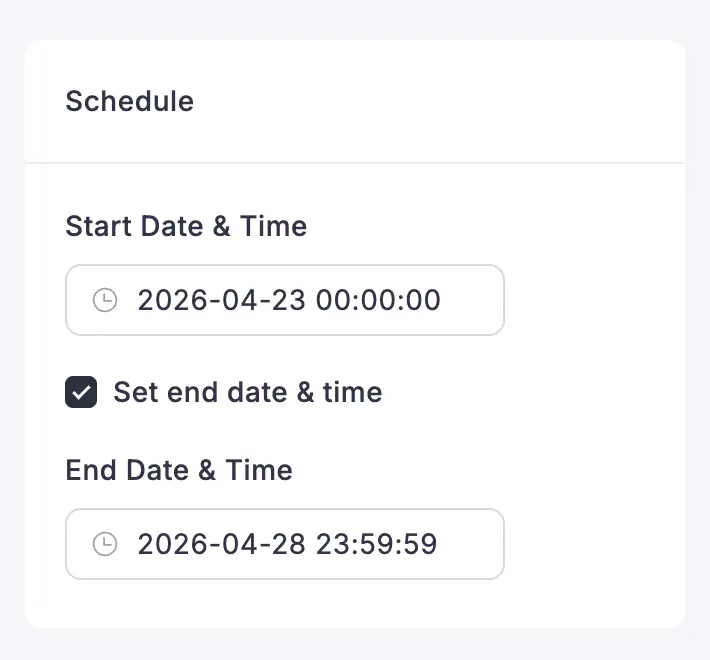
I'm using the coupon scheduling feature (Start Date & Time / End Date & Time) and I need to understand which timezone is used when these fields are evaluated.
Specifically:
- Does FluentCart use the WordPress timezone setting (Settings > General) to interpret the coupon start/end times?
- Or does it use UTC, the server timezone, or something else?
This matters a lot to me because I run time-sensitive promotions that must expire at a precise local time. If the timezone reference isn't clear, I risk the coupon expiring too early or too late for my audience.
Thank you for clarifying this.