


Client placed an order, and the checkout method was Paystack ( the blue logo) , however, it seems they were able to place the order, which is on hold without payment. The second order went through, then another order was placed without making the payment. https://www.awesomescreenshot.com/image/57784575?key=100a3101cf5b91dc428f5ca930c2f7e8

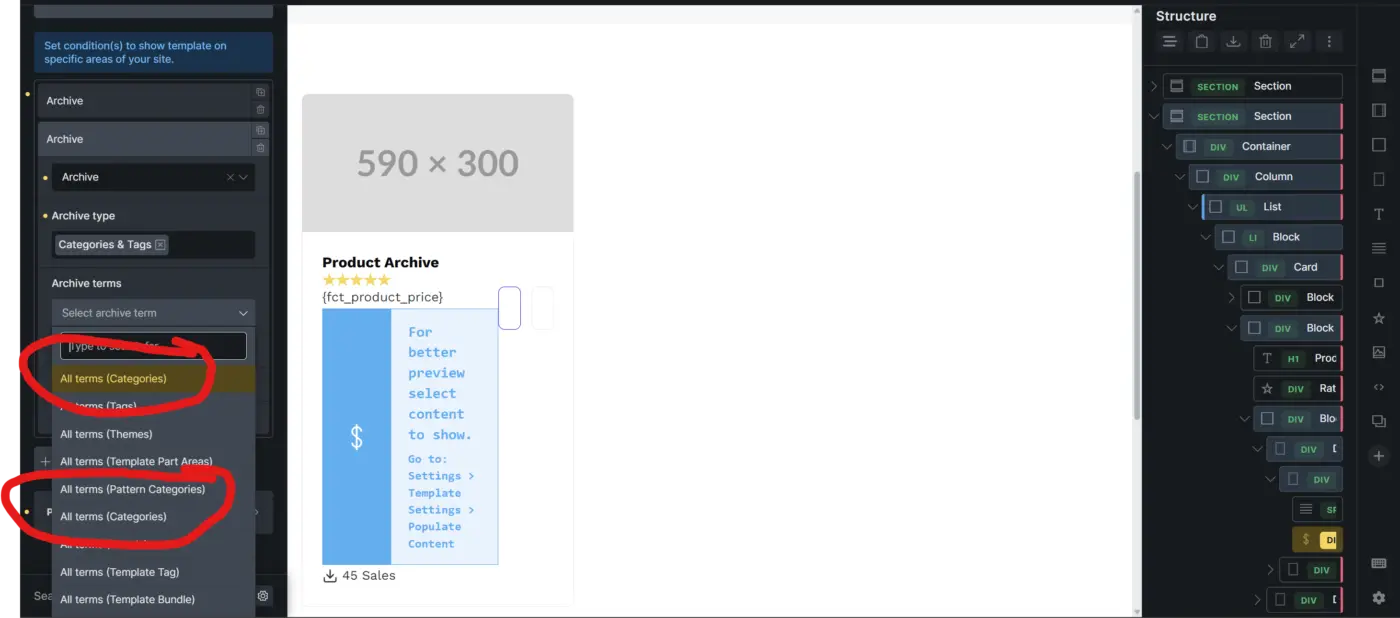
When selecting Archive type in the Bricks Builder template conditions, it shows two “All Terms (Categories)” options. One is for posts and one is for products. Ideally, the naming should be different for product archives, such as “All Terms (Product Categories)” or “All Terms (Product Type)”.
Also, the dynamic tags for product title and product pricing are not working. Maybe I’m doing something wrong, but they are currently not working for me.

I would love to see an expense option in cart for my service based business. Is there any plan for that soon? I really love it so far... my business is Drafting and Construction but only the expense with ability to create estimates for a project. I hope that make sense.


Is there a pre-send hook/filter here where we can add a block to the outgoing email, i.e to add a Zoom link or some other information we want to be in the purchase and go out with them?
If there isn't, could we get one added? It would open up so much in terms of integration post-purchase before the email is sent

I have seen a few posts stating that custom checkout fields are in the works. Will we be able to split the Full Name into two fields First Name and Last Name since it is a system required field?
I have users inputting only their first name into this field. This might be user error or an automatic browser form filling error.

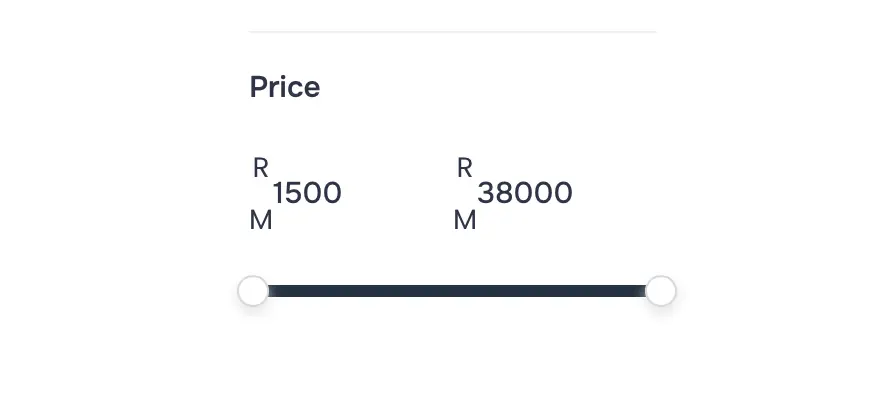

The bundle I use on a regular basis is buy X for $X (eg: buy any 6 for $100). Then the bundle option would display all the products in this bundle group so the customer can select which 6 they'd like. Sometimes the customer chooses 6 unique products and sometimes they want multiples of the same product (eg: 2x A, 3x B, 1x C) so both options need to be available and sync with inventory correctly. I noticed a few of the Woo plugins have issues syncing inventory, especially with variable products.
I know there are several other types of products bundles people use on a regular basis so hopefully yall can build out a thorough bundle feature in Fluent Cart. This (and the lack of integration with PirateShip) are the 2 primary reason I haven't purchased yet. I want to, but I can't :(
I've been using them for years. They offer the cheapest shipping labels, locally and globally, so this is one of the primary things preventing me from purchasing FluentCart. The integration should be really simple. Woo already has it set up so you could use them as an example but all it needs to do is pull orders into PirateShip so the details are automatically populated and trigger the shipping email with tracking number and link once the label has been purchased.

As 2026 approaches (and with a little extra relief thanks to the postponement of some EU regulatory requirements to 2027) many of us are genuinely excited about the idea of running 100% of our business inside FluentCart next year.
But there is one very real obstacle that continues to surface across the community, especially among professionals who sell services:
we still can’t create manual orders in a way that meets the operational and regulatory standards required in Europe.
Let me break down what this means and why it matters.
1.Manual orders need proper tax calculation
Right now, when creating a manual order, FluentCart doesn’t calculate taxes with the same logic used at checkout.
For lawyers, consultants, designers, agencies, and anyone who invoices services, this creates immediate friction (and in many cases, compliance risk).
2.Tax labels must reflect the actual tax applied
Terms like “estimated tax” or “excluded tax” won’t work for professional invoices.
In Europe, the requirement is explicit:
the tax must be identified by name, such as ES VAT, IT VAT, FR VAT, etc.
This isn’t a cosmetic detail.
It’s a legal and accounting necessity.
3.“Pay What You Want” is essential for service businesses
Many consultants agree on a price directly with a client and then generate a manual order that reflects that agreement.
Without PWYW inside manual orders, the workflow breaks (and people can’t switch their billing system).
Why this matters right now?
On January 1st, every service provider in Europe needs their billing setup locked, compliant, and ready for the new fiscal year.
If the system isn’t fully ready on Day 1, switching mid-year becomes nearly impossible from an accounting standpoint.
So the decision becomes binary:
- If FluentCart supports manual orders properly, we can finally migrate everything.
- If not, we must stay with our current providers for the entire 2026 cycle.
And that would slow down adoption at the exact moment demand is rising.
The opportunity:
If FluentCart delivers these three features prior to 2026:
✔ correct tax computation in manual orders
✔ proper tax labels
✔ pay-what-you-want support
…it instantly becomes a top choice for European professionals who rely on precise invoicing: consultants, lawyers, designers, agencies, coaches, accountants, and more.
These users are loyal, long-term, and deeply integrated once they standardize their billing workflow.
We’re all rooting for this.
We want to move fully into the Fluent ecosystem.
And we’re very close (genuinely close).
If you need feedback, test cases, or real-world workflows, we’re ready to help. Let’s make 2026 the year FluentCart becomes the default for service businesses across Europe :)
If not, we’ll be crying on the sidelines while the rest of you enjoy FluentCart all through 2026 😂
PS.: Service providers… assemble!


To begin with, I’ve purchased the following extensions:
FluentCart PRO (lifetime)
FluentCRM PRO (annual)
FluentBooking PRO (lifetime)
FluentSupport PRO (lifetime)
FluentForms PRO (lifetime)
FluentAffiliate PRO (lifetime)
FluentCommunity PRO (lifetime)
Ninja Tables PRO (lifetime)
I’m setting up an online store for artists. The goal is to showcase their merchandise on my platform so their fans can purchase directly from my site, while allowing my members to earn commissions through the affiliate program. So far, everything is working as expected.
Where it becomes more technical is when managing two different sales models.
Products that I physically own in inventory
These are physical items that I ship by mail. As soon as the customer enters their address, the system automatically calculates the shipping cost based on their location. FluentCart handles this part.
My challenge is figuring out how to avoid adding each product one by one, because that would be too time-consuming and inefficient.
Products belonging to artists or external shops
In this setup, I don’t hold any inventory. The artists and stores already manage their own stock on their platforms. I simply want to display their products in my store, similar to a drop-shipping system.
Here is the ideal scenario:
The customer arrives on my site through a referral link
They purchase the product directly on my site
The affiliate earns their commission
Once the purchase is completed, my system must send the order to the artist or the merchant
And ideally, I want this part to be automated, so I don’t have to manually forward every single order, which would waste a lot of time… and money
What I want to confirm
How can I add an external product to my store so that:
I don’t manage any inventory
The customer pays on my site like any other product
The sale is recorded by my affiliate program
And the order is automatically (or semi-automatically) forwarded to the supplier without manual intervention
Do FluentCart and FluentAffiliate support this type of workflow, or do I need to connect an additional solution such as a webhook, an API, an automation tool (Make, Zapier, Pabbly), or use a virtual-product system with a custom trigger?