

FluentCRM 3.0 is finally here… so I decided to do something risky.
Instead of testing it on a staging site, I updated FluentCRM directly on my LIVE business website the same website that runs Divi University, my email automations, campaigns, memberships, and community.
https://diviuniversity.com/fluentcrm
In this video, I test:
• The brand-new FluentCRM 3.0 dashboard
• The speed improvements
• The new Gutenberg email builder
• AI email writing tools
• SMS integrations
• Conditional content
• Automation updates
• Reports & analytics
• FluentCart integrations
• UI/UX improvements
I’ve been using FluentCRM for nearly 5 years, and it has completely replaced expensive email platforms for my business. If you’re using WordPress and email marketing, this update is worth seeing.

On this page Jacob Marinko posted something I found rather intriguing, but at the same time overwhelming. So I turned to chatGPT. This is its reply:
The “plugin” is not a normal AI writing assistant. It is an AI control layer for WordPress.
In plain English:
Wicked Evolutions is building a system that lets AI agents operate WordPress through structured, permission-aware “abilities” instead of random scraping, guessing, or browser clicking.
What it actually is
The docs describe a stack called Abilities for AI by Wicked Evolutions. Their homepage claims a complete reference for 740 abilities across 39 modules, connecting AI agents to WordPress through the WordPress Abilities API.
The architecture is roughly this:
- You use an AI client, for example Claude Code, Cursor, or another MCP-capable tool.
- That AI talks to a local Abilities MCP Bridge, a Node.js process.
- The bridge sends requests over HTTPS to your WordPress site.
- A WordPress plugin called Abilities MCP Adapter receives those requests.
- The adapter calls WordPress’s Abilities API.
- The registered abilities then perform real WordPress actions.
So the AI does not merely say, “Here is some PHP code.”
It can potentially say:
“Create this page.”
“Edit this block.”
“Read these CRM contacts.”
“Generate this dashboard.”
“Update this FluentCRM segment.”
“Diagnose this plugin state.”
And then actually execute structured calls.
The product suite
According to the docs, the suite has four main pieces:
Abilities for AI
This exposes WordPress core operations to AI: content, blocks, media, users, themes, settings, and related site functions.
Abilities for Fluent Plugins
This is the part that matters most for your Fluent ecosystem. It claims 382 abilities across 13 modules for Fluent plugins.
Abilities MCP Adapter
This is the WordPress plugin that translates AI/MCP requests into WordPress Abilities API calls.
Abilities MCP Bridge
This is the local bridge that connects AI clients to one or more WordPress sites. The docs describe it as multi-site capable.
Their GitHub profile also describes the project as infrastructure that makes WordPress “AI-native” by shipping ability libraries, protocol adapters, transport bridges, and a knowledge layer.
Why FluentCRM / FluentCommunity is central here
The GitHub repository list includes a project called abilities-for-fluent-plugins, described as a “first-party WordPress Abilities API translator for the Fluent plugin ecosystem,” covering CRM, Community, Forms, Boards, Booking, Cart, Affiliate, Support, SMTP, Auth, Snippets, and Messaging.
That means this is not just “AI for WordPress pages.”
It is trying to make the Fluent ecosystem operable by AI.
For you, that could eventually mean:
“Find everyone in FluentCRM who joined the Master Key community but has not bought VIP.”
“Create a FluentCRM automation for German users who clicked the Sacred Symbols iOS announcement.”
“Analyze FluentCommunity engagement and identify the most active members.”
“Draft a campaign for people who listened to chapter 7 but did not subscribe.”
“Create a dashboard of purchases, community activity, and CRM tags.”
That is the real promise.
The “Core CPT Bridge Effect”
One of the more interesting claims from their prototype docs is that AI can operate many WordPress plugins through WordPress’s own structures, especially custom post types. They call this the WordPress Core CPT Bridge Effect.
Plain English:
Many plugins store their data as WordPress posts, post meta, taxonomies, users, options, or custom database tables. If the AI can safely inspect and manipulate those structures through WordPress abilities, it may not need a custom integration for every single plugin.
That is powerful, but also dangerous if permissions and scope are not very strict.
What makes this different from ordinary AI plugins
Most AI WordPress plugins do one of these things:
They generate text.
They generate images.
They create SEO titles.
They summarize posts.
They add a chatbot.
They help write product descriptions.
This is different.
This is closer to:
“Let an AI agent use WordPress as an operating system.”
That means the AI can discover available functions, understand their required inputs, execute them, and return structured results.
The docs describe this as typed, schema-validated, permission-gated calls.
That phrase is important.
It means: the AI should not just freestyle. It should call known actions with known parameters, and WordPress should check whether the action is allowed.
The “Knowledge Layer”
Another big concept is their Knowledge Layer.
They describe it as persistent AI memory built into WordPress: the AI can read site identity and state documents, log sessions and observations, use tags, and continue work across conversations.
Plain English:
Instead of every AI session starting from zero, your WordPress site would contain a memory layer saying things like:
“This site belongs to Helmar.”
“The brand is Sacred Symbols.”
“German and English are primary languages.”
“Do not alter production CRM automations without approval.”
“The current project is the Master Key System content ecosystem.”
“These pages were edited last session.”
“These workflows are known and approved.”
That could be extremely useful.
It also means the site becomes not just a CMS, but an AI-operable knowledge environment.
Alpha / pre-alpha status
This is still early.
The public docs say v0.3.0.
The GitHub profile says Alpha launching April 2026.
The prototype repository says they are in pre-alpha, using the stack to build their own site and documenting every gap as a product improvement.
So I would treat this as:
Very promising architecture, but not yet something I would blindly trust on a production CRM.
The big opportunity for you
For your ecosystem, this could be huge.
You already have:
Sacred Symbols
FluentCRM
FluentCommunity
WordPress
Fluent/WordPress automations
Master Key System content
Audio/Music content
Possibly WooCommerce/FluentCart/Revenue-style flows later
A system like this could become the missing bridge between your ideas and the actual operational execution.
Instead of manually clicking through FluentCRM, FluentCommunity, WordPress pages, posts, tags, segments, automations, and content updates, you could eventually have an AI agent that understands:
“This is my business system. These are my users. These are my products. These are my campaigns. These are my communities. These are the rules. Help me operate it.”
That is exactly the kind of use case where “AI-native WordPress” becomes meaningful.
The big risk
The risk is equally obvious:
If the AI can operate WordPress, it can also break WordPress.
It might:
delete or overwrite content,
change CRM tags incorrectly,
send an email campaign too early,
modify automations,
touch live customer data,
misread purchase status,
change permissions,
or make a confident but wrong structural change.
This is why I would insist on:
staging-site testing first
Never start with your live Sacred Symbols or Master Key ecosystem.
read-only mode first
Let it inspect, summarize, diagnose, and report before allowing write actions.
approval gates
No sending emails, deleting data, modifying automations, or changing user roles without manual confirmation.
audit logs
Every ability call should be logged: who called it, what changed, when, and with what parameters.
strict scopes
The AI should only get access to the abilities it actually needs.
backups before write access
Especially before letting it touch FluentCRM, FluentCommunity, subscriptions, products, or user data.
My interpretation of the original Fluent post now
The Fluent community post was not merely saying:
“Here is a cool AI plugin.”
It was likely saying:
“Here is an early alpha of a WordPress AI infrastructure layer, with special relevance to Fluent users, because it exposes Fluent plugins as AI-operable abilities.”
That makes the “free LTDs for the extended Fluent Community” much more strategic. They want Fluent-heavy users as early testers because FluentCRM, FluentCommunity, FluentForms, FluentCart, FluentSupport, etc. are exactly the kind of structured business plugins where AI operation becomes valuable.
My honest verdict
This is genuinely interesting.
Not because of the marketing phrase “AI-native,” but because the architecture makes sense:
WordPress Abilities API
plus MCP
plus Fluent plugin abilities
plus a knowledge layer
equals an AI agent that can operate a WordPress business system.
For you personally, I would absolutely watch this and possibly join the alpha — but only with a staging site or a non-critical test installation first.
The best test case for you would not be “write a blog post.”
It would be something like:
“Connect to a staging clone of helmar.live, inspect FluentCRM and FluentCommunity structures, generate a read-only map of contacts, tags, spaces, posts, automations, products, and engagement flows — without changing anything.”
If it can do that cleanly, safely, and transparently, then it becomes very interesting.

Hi there,
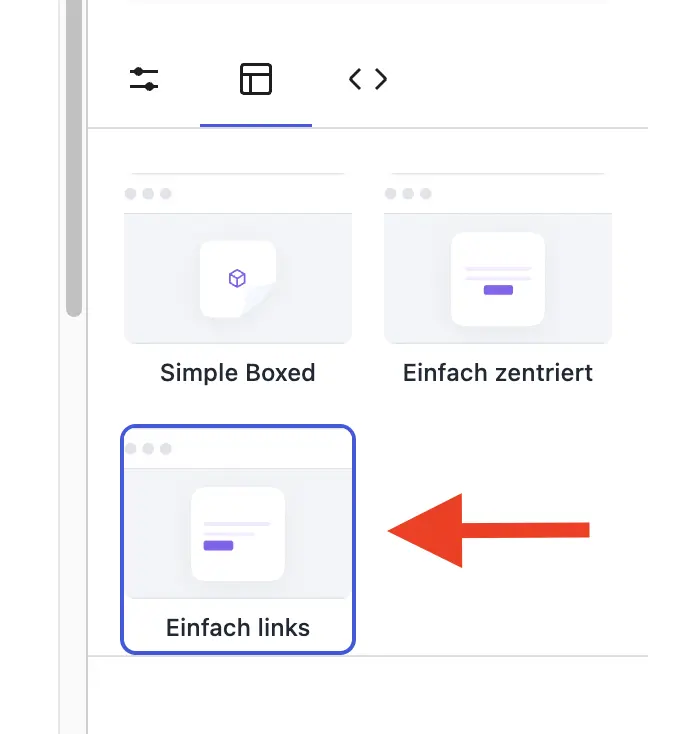
if I select “Simple Left” as the layout in the Gutenberg Editor, it switches back to centered after saving.
Thank you for fixing it.
Hi there,
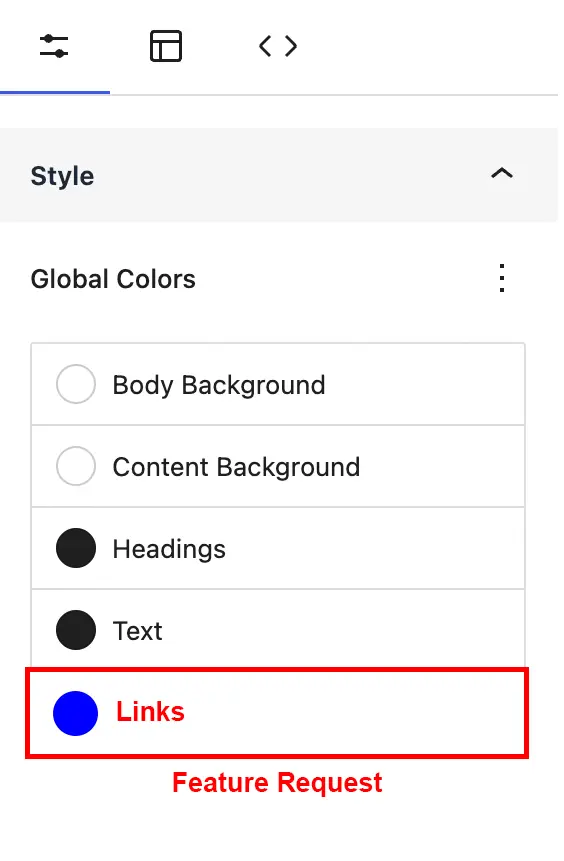
as the headline says, a global color option for links in the Gutenberg Editor would be great.
Maybe also add an optional underline setting/checkbox for text links.
Thank you 🙏🏼
Hi, I’m having an issue with the “Synced Pattern” option.
The checkbox is enabled initially, but every time I click save and refresh the page, the checkmark disappears automatically. So the pattern is no longer synced after saving.
Could you please take a look 🙏🏼
Thank you.
![[SOLVED] 3.0 BUG: Synced Pattern Checkbox Keeps Unchecking After Saving](https://cdn.community.wpmanageninja.com/wpmn_community/fluentcom-5fnSX4ETBcmu1MazocLtptkG5tmN23tx-fluentcom-Bildschirmfoto-2026-05-16-um-08.37.18.webp)

After installing the latest updates the whole user interface is shown for half a second and disappears.
I tried several browsers an my MacBook Air M4 and flushed all caches.
Can you give me a hint were I can find the older version 3.0.2 (PRO) and the corresponding "standard" version (3.0?)
Thank you.

Two days into the V3 launch and you've already helped us catch and fix a bunch of things. So here's a quick patch with what 3.0.3 brings.
Improvements
- Database performance is especially noticeable on sites with larger contact bases.
- SMS SmartCodes are now smoother and more reliable.
- Cleaned up a few quirks in Advanced Filters and Dynamic Segments.
Bug fixes
- UI issues across the dashboard.
- WooCommerce button styling glitch.
- SmartCode links inside the Gutenberg Button block now work correctly.
- Dark mode rendering on automation pages.
- A handful of smaller polish fixes underneath.
A few of these we caught ourselves, but most came from your reports over the last 24 hours. Genuinely, thank you for paying that close attention.
Just update FluentCRM as usual. The new build is live and recommended for everyone on 3.0.
If something still feels off, broken, or just weird, tell us. We'd rather hear it fast and fix it fast than have you quietly working around it.
More improvements coming.

Hi guys. First of all, congrats on v3.
I 'thought' in the email sequence builder you could use the toggle / icon on the right side (stacked dots) to drag emails around in the sequence. Is that correct or not? I cannot do that. Can only move them by changing the delay in each one. Thanks.


Shahjahan Jewel and team - wow...love the new Fluentkit organizing interface!


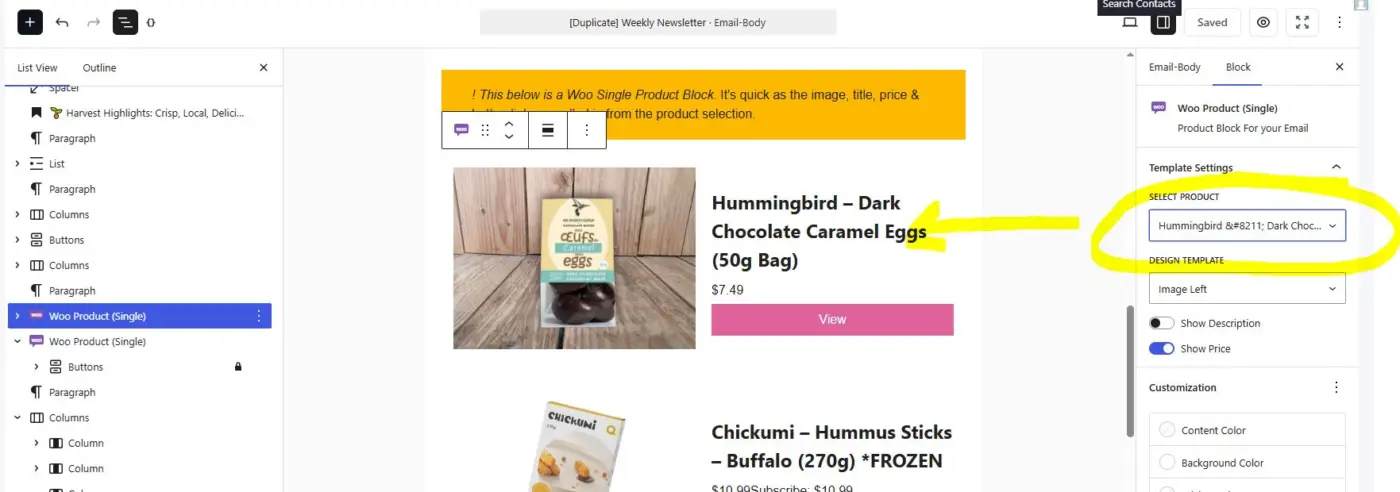
After I add Woo Product (Single) to my template, the settings menu shows an option for changing the product, but I only see five products. There is no option to search for a product. Is this a bug or incomplete functionality?