


Let's say my offer is "pay 600€ once for 6 month of my membership, after that, pay XY€ monthly subscription, which you can cancel everytime."
If i understand correctly, i can already do that by setting up a monthly subscription with a price of XY€, a test period of 180 days (so no subscription payments for 6 month) and a setup fee of 600€ (which is hopefully charged right at the start and not at the end of the test period), right?
But what if i would want to let my users pay the first 600€ as an installment, which automatically changes to a subscription after 6 month? is that a planned feature? (pretty common here in Germany)

Ladies and Gentlemen,
Someone has sent me this sequence.
👉 https://comprendre.ai/wp-content/uploads/2026/01/1dfab4b62a6f16fe.gif
Please note that there appear to be three major issues with the cart display on smartphones.
- For each product, the name appears twice.
- For each product, the price appears twice.
- Scrolling is required to view the full text.
Thx
David

Ladies and Gentlemen,
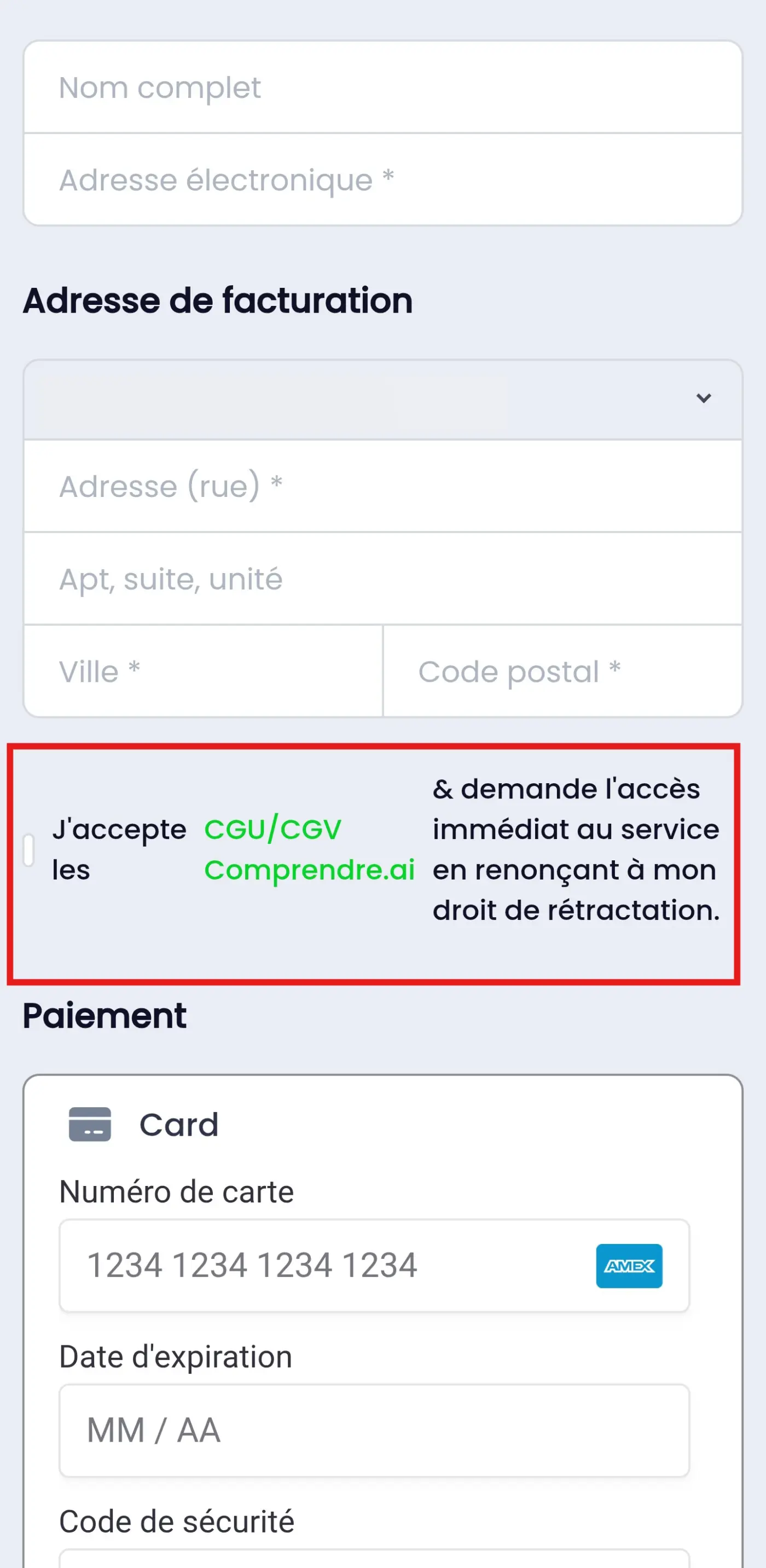
Please, this issue with the text formatting for the acceptance of the terms of use and terms of sale really needs to be fixed, especially since the checkbox disappears depending on the length of the text. It is both urgent and essential for European users. 👇
Thx
David

I am trying to export data based on product sales and customers. I have looked in the documentation and through the dashboard multiple times., but if there is a method to export data to CSV (outside of a few outliers like new vs returning customers), it's eluding me.

Until more is added to Fluent Cart and it has more features I had a moment of genius LOL Let me explain
Using FluentBookings as a Service Orchestration Layer with FluentCart (Not Just Appointments)
I wanted to share a workflow I recently unlocked that may help anyone selling delivery-based or scoped services, not just live calls.
Most people think of FluentBookings strictly as a scheduling tool. What I realized is that when paired correctly with FluentCart, it can act as a service activation layer, even for non-live deliverables.
The key insight
A booking doesn’t have to represent a meeting.
It can represent a service instance.
The setup
- Create a Single Event/Calendar in FluentBookings
- Set Location → Custom (for example: “Delivery Only”)
- Rewrite confirmation emails to remove all meeting language
- In Payment Settings, select Use FluentCart Checkout
- Attach the booking to a FluentCart product
Result:
- Payment is processed by FluentCart
- A real FluentCart order is created
- The fee appears in the customer’s FluentCart account and order history
- FluentBookings becomes the service container, not a calendar obligation
Why this is powerful
Each booking/calendar can now control:
- Service-specific language
- Intake questions
- Limits and workload caps
- Notifications
- SLAs
- Automations
While FluentCart remains the financial source.
Extending it operationally
From there, the booking can trigger:
- FluentCRM tags and automations
- FluentBoards task creation for execution
- Intake forms for scoped work
- Delivery notifications when work is complete
I am now using:
- One board per service type (for example, SEO Audits, Custom Scope Work)
- One task per client engagement
- Labels or fields for scope (Standard vs In-Depth)
- Booking confirmation as the moment work officially exists
Where this shines
This works extremely well for:
- SEO audits
- Report-based services
- Custom landing pages
- Delivery-only builds
- Scoped engagements with or without deposits
It avoids:
- Fake “appointment” semantics
- Overloading products with scope logic
- Fragmenting payment history across tools
Mental shift that made it click
- FluentCart = money and client account
- FluentBookings = service activation
- FluentCRM = state and communication
- FluentBoards = execution
- Forms = depth when needed
Once I stopped forcing everything into “products” or “calls,” the system became calm, scalable, and predictable.
Sharing in case it helps others think beyond the default booking use case.

Is there a snippet where we could add items to the Fluent Cart Dashboard? I have two things I would like here in particular:
- Add my fluent forms payments (aka [fluentform_payments])**** since I was collecting payments prior to Fluent Cart AND there isn't a "pay what you can" feature yet so I still have to use Fluent Forms to collect donation based payments.
- List the courses that they are enrolled in so they can go directly to them (Currently have a "My Courses" link in my header
- And honestly, there are many other things that this would be useful for such as displaying custom field information from their Fluent CRM contact.
If there is one, I apologize, I couldn't find it when I was searching here or in the documentation.
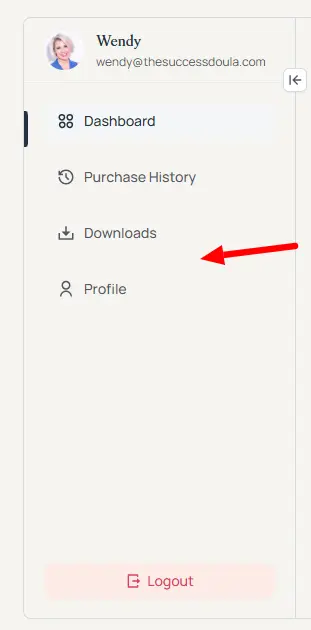

I've purchased my own product to see what happens. Found out that there's no cancellation link/option, neither in the confirmation email nor in the user profile. How.on.earth? Or what am I missing?

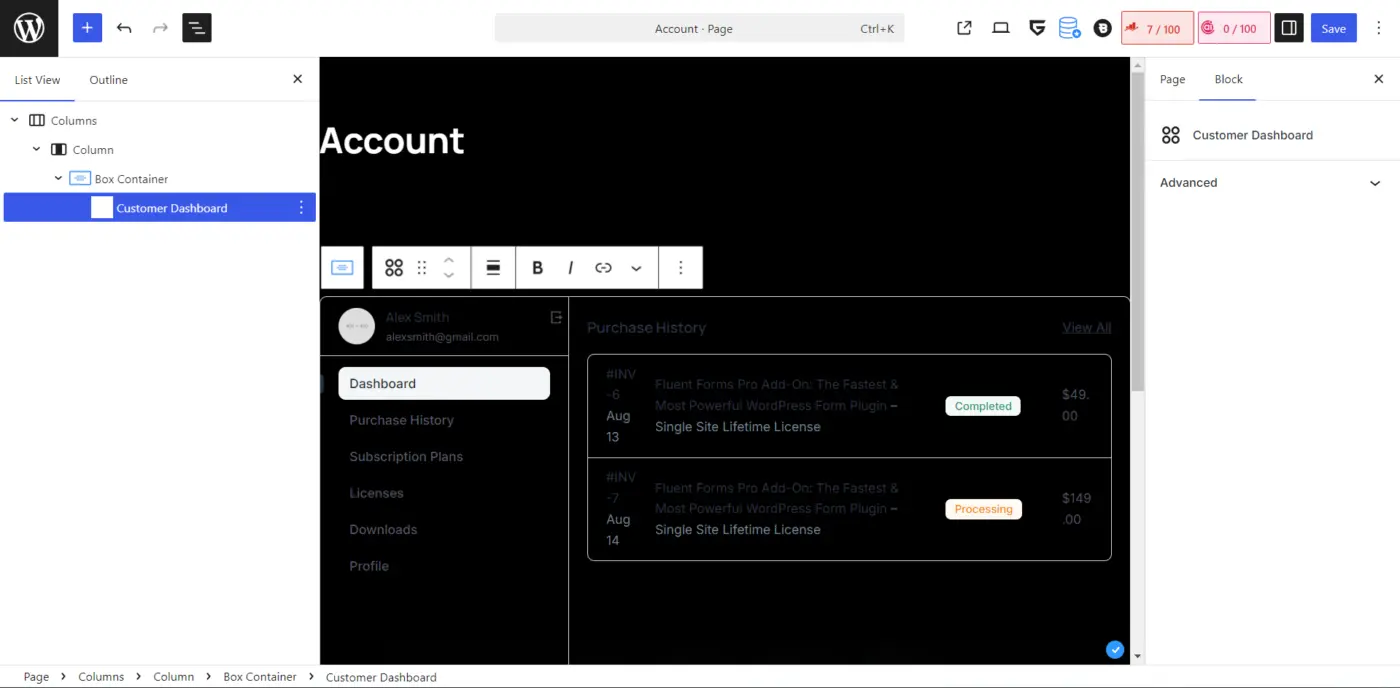
Hi, is there anyone that tries to customize the customer dashboard with gutenberg?

Hello, everyone! I am using FluentCart and want to add two products by filtering by category. I tried the shortcode [fluent_cart_products category="id"] but it didn't work. Can anyone help me? Shahjahan Jewel Jorge de los Reyes


I have a scenario where some orders are manually adjusted during pickup. It would be very useful to have an option to have the customer pay the difference in-person through a QR code that could be generated after the order is edited. The customer can then pay the difference directly by scanning the QR code with their phone.